Day 16. Washington, D.C.
Timezone: UTC-4.
I woke up very early after a sweet dream. I decided I would ignore the advice of the wise gentleman from “Queen Anne” and go to Washington, D.C. to see the presidential inauguration as I had originally planned. On the train, I indulged myself in the reading of “Democracy in America”, but I do not pretend to have an ambition to complete the whole book before the end of my U.S. trip. The pages that did nourish me, made me think about where democracy in America is today. The same gentleman who discouraged me from going to D.C. also suggested that I'd make a better use of time by swapping out de Tocqueville's work for J.D. Vance's autobiography, which remains to be seen if I will act upon, but which would probably answer my question.
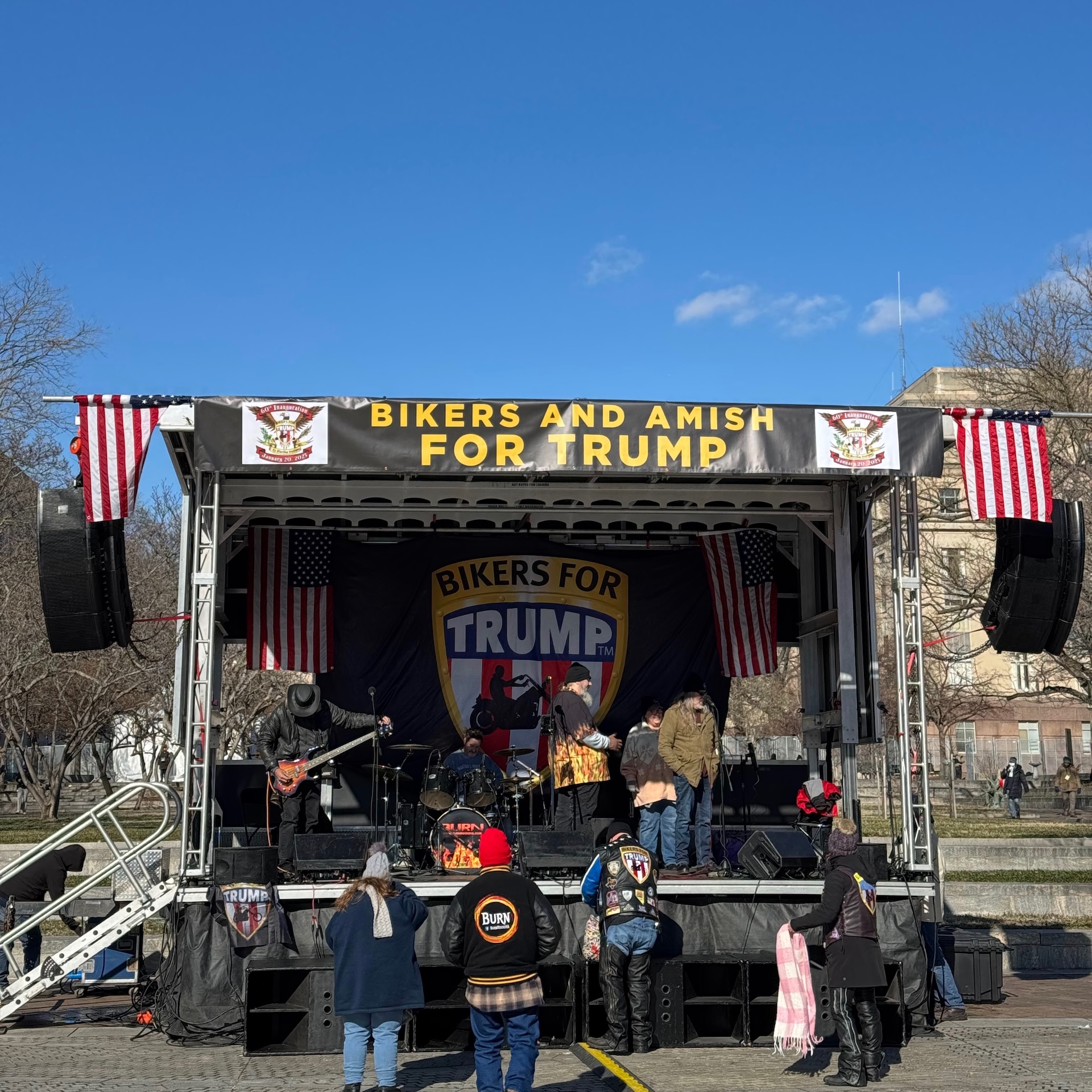
The city turned out not to be as packed as had originally been envisioned by those who were actively discouraging me from going. This must clearly have been caused by the freezing temperature. Nor was I witness to any physical violence – in fact, it seemed like Washington may have been the safest city in the world on that particular day, with all the law enforcement deployed from other states. I was, however, subject to a fair share of aesthetic violence. Constitution Avenue – which I entered after having every single item in my backpack thoroughly inspected, including my pastilles partially scattered – was very lively, with a small stage put together by “Bikers and Amish for Trump” (I sure assume the bikes weren't electric), Baptist women giving out leaflets with relevant Biblical verses, one guy insisting I must be an Italian, another doing faithful impressions of Trump's speeches, and yet another one telling me about how awful “crooked Joe” really “has been”. The folklore of the support base of the president-elect is definitely colourful.
A sublime conversation with a girl roughly my age (Rachel – Jacob's second wife, which we did not fail to amuse ourselves at), and a gentleman in his fifties on the floor of Union Station, whilst waiting for our trains. History, theology, artificial intelligence, Trump, and a few other “important” names. The gentleman turned out to have just been made a victim of the same scam that was attempted against me a few years ago. I connected the dots when he relayed the story, and even the photograph of the attacker was the exact one I had seen before. The world is small, or the villains are omnipresent.
Walking back from the station in -10 degrees, and I had lost my toque to the East 42nd Street.
Whenever the political laws of the United States are to be discussed, it is with the doctrine of the sovereignty of the people that we must begin. The principle of the sovereignty of the people, which is to be found, more or less, at the bottom of almost all human institutions, generally remains concealed from view. It is obeyed without being recognized, or if for a moment it be brought to light, it is hastily cast back into the gloom of the sanctuary. “The will of the nation” is one of those expressions which have been most profusely abused by the wily and the despotic of every age. To the eyes of some it has been represented by the venal suffrages of a few of the satellites of power; to others by the votes of a timid or an interested minority; and some have even discovered it in the silence of a people, on the supposition that the fact of submission established the right of command.
In America the principle of the sovereignty of the people is not either barren or concealed, as it is with some other nations; it is recognized by the customs and proclaimed by the laws; it spreads freely, and arrives without impediment at its most remote consequences. If there be a country in the world where the doctrine of the sovereignty of the people can be fairly appreciated, where it can be studied in its application to the affairs of society, and where its dangers and its advantages may be foreseen, that country is assuredly America.
Alexis de Tocqueville, “Democracy in America”