Day 3. London
Three locations: an art gallery (The National Gallery), an abbey (Westminster Abbey) and a concert hall (Wigmore Hall). Three different ways of communing with art.
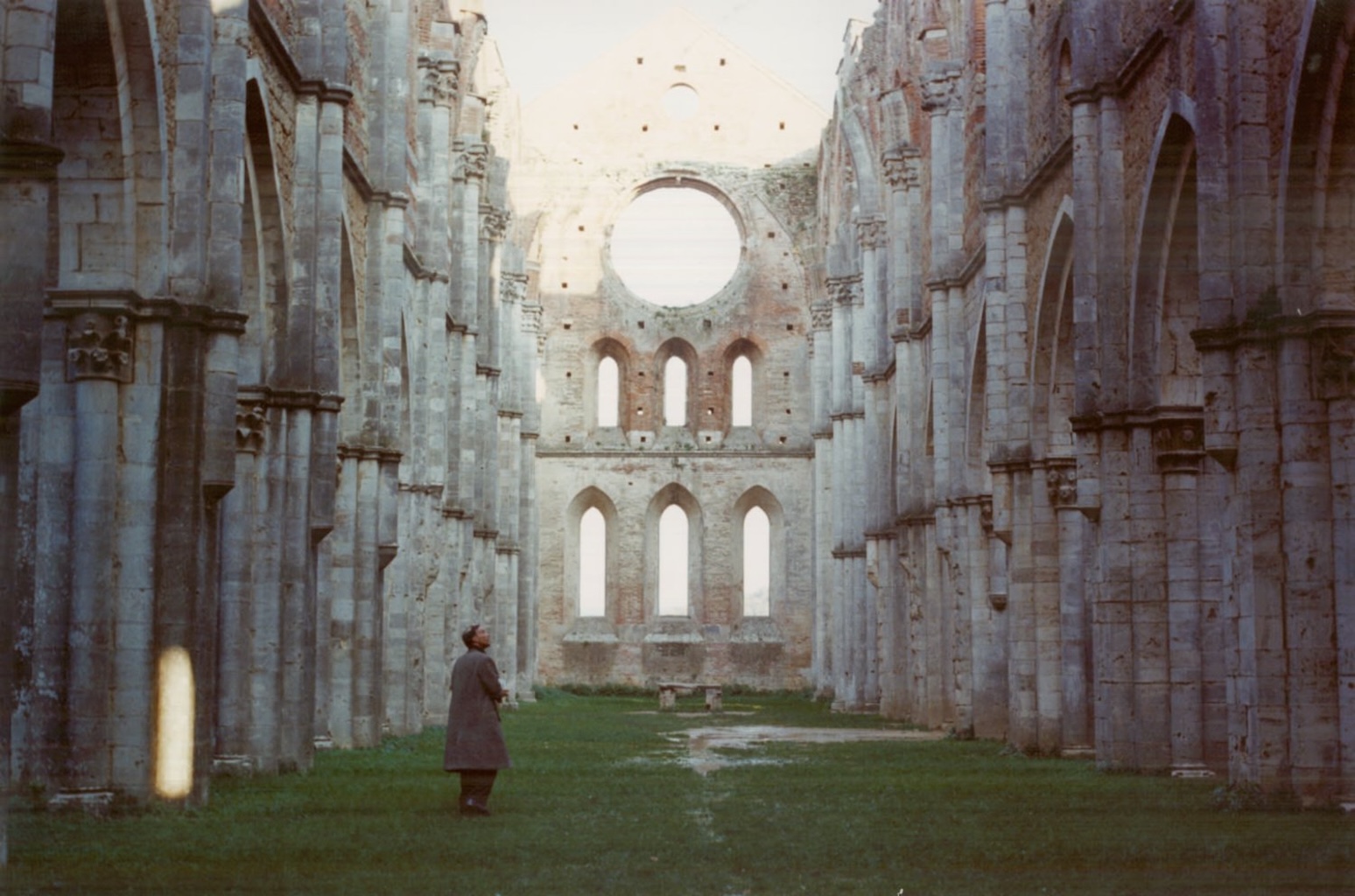
Of the three, the Abbey is to me what Peppa Pig World is to Boris Johnson1 – very much my kind of place. Though, strictly, formally speaking, Westminster Abbey holds the status of a “Royal Peculiar” – and is subject only to the Sovereign, and not to any archbishop or bishop – from an architectural perspective it belongs to the class of monumental sacral architecture which we tend to associate with the term “cathedral”, and cathedrals have long been something that I look towards with much fondness and… hope. Village and small town churches have their distinctive charms which can even melt our hearts, but do they impose on us, their visitors, any fear, any realisation of us being very small before the might of something or someone much bigger? It is a very useful state of mind to create in the visitor, as that is exactly how things stand with us in this world – as one pleases, it would be before either God, nature or the universe – and we'd better be conscious of that. Cathedrals force us to look up, which renders us superior to pigs – at least in this one rather particular regard, for in many other matters we actually fall short of pigs very much. Cathedrals require the care of many guardians and clergy, which precludes any individual feeling monopolous and self-important about their role in the cathedral's life, which is not something unheard of in small parishes that become the pantry for one's vanity and pride. Finally, cathedrals still occasionally get set ablaze without actually burning down completely, which reminds us of how resilient structures they are, and that in our engagement with the reconstruction process we can, in fact, modestly relive the multigenerational experience of our ancestors witnessing a cathedral's construction.
Art galleries seem to be to art what zoological gardens are to animals. A necessity, I suppose. Where else to safely introduce children to live wild animals if not in a zoo, and where else to explore a wide breadth of art in a time-efficient manner than in an art gallery, indeed? But if it is a necessity for a hungry and time-deprived person, it poses the question of what the real purpose of art in the world is. And if paintings had a soul and emotions, what would they make of being inventoried, one by one, by Chinese (or other) tourists looking at the paintings through the screens of their video-recording telephones? And what about the paintings-introverts? Has anyone asked them if they want to be in a single room with two dozen other visuals all day long? This must be hell for them. Even the satisfaction from seeing the unliked acquaintance get smeared by an exalted activist with tomato soup can't quite make up for the isolation in a crowd.
And the concert hall? It featured a lovely Art Nouveau mural, which set the stage to a multisensorial sensation as the auditorium was filled with the fruits of labour of Nicola Matteis, Henry Purcell and various Couperins. That alone is of vital importance. I believe our senses were made to be engaged together.
And yet, I cannot despair.
They still possess, despite all things and all persons, so much beauty, our old living stones! None has succeeded in killing them, and it is our duty to gather together and defend these relics.
Before I myself disappear, I wish at least to have told my admiration for them. I wish to pay them my debt of gratitude, I, who owe them so much happiness! I wish to honor these stones, so lovingly transformed into masterpieces by humble and wise artisans; these moldings admirably modeled like the lips of a young woman; these beautiful lingering shadows where softness sleeps at the heart of power; these delicate and vigorous ribs springing up toward the vault and bending down upon the intersection of a flower; these rose windows whose magnificence was inspired by the setting sun or by the dawn.
To understand Cathedrals one must be sensitive to the moving language of their lines, amplified by shadows and reinforced by the graduated form of their adorned or unadorned buttresses. To understand these lines, tenderly modeled and caressed, one should have the good luck of being in love.
Auguste Rodin, “The Cathedral is Dying”
Boris Johnson praises Peppa Pig in rambling speech at CBI (22 November 2021)